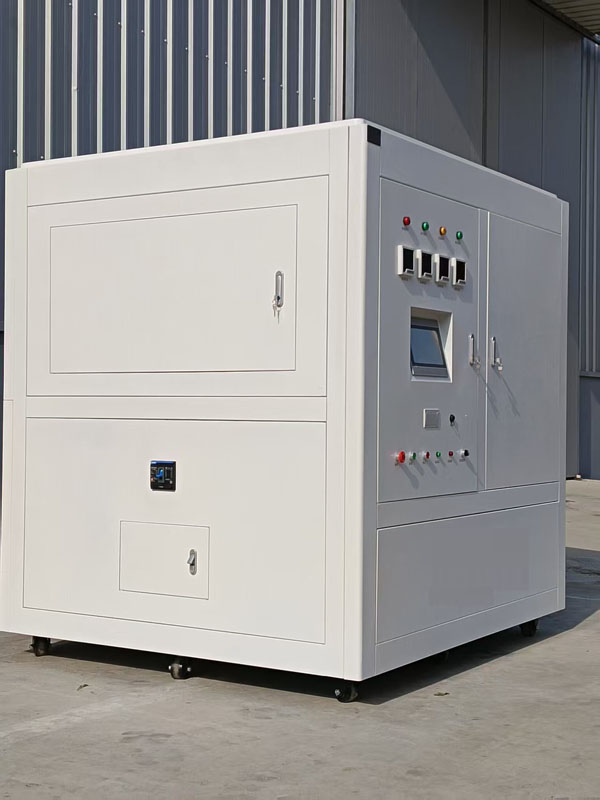
NX-10000Q Three-phase high-current system with significant temperature rise
The NX-10000Q features continuous adjustable speed control with stepless speed regulation. It supports three-phase simultaneous output, single-phase output, or phase-separated output. The system offers two output modes: manual mode and automatic mode.
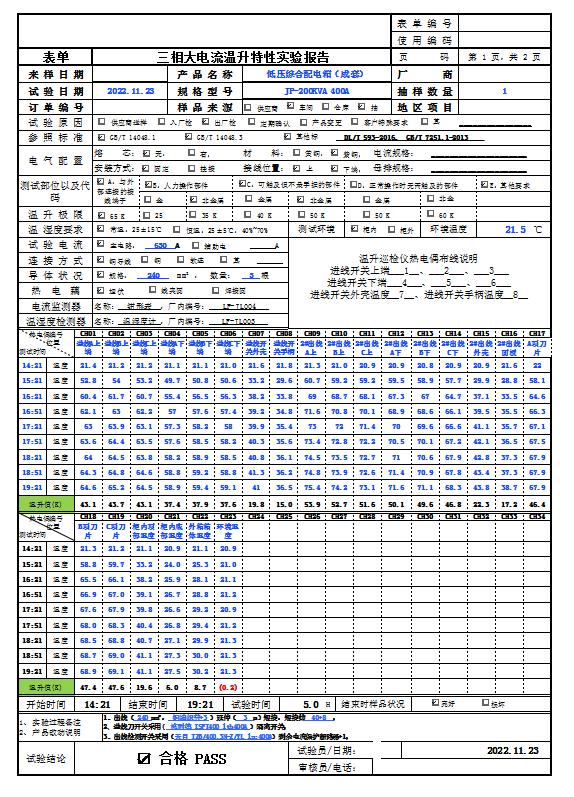
Overview :The fully automatic three-phase temperature rise high-current system (fully automated temperature rise testing device) primarily consists of an AC power distribution unit, voltage regulator transformer, converter, power compensation components, drive control unit, data acquisition unit, human-machine interface, microcomputer control system, temperature monitoring unit, and configuration software. It features high output power, compact size, and lightweight design. This system is widely used for temperature rise testing in high-voltage switchgear, low-voltage switchgear (JP cabinets), busbars, current transformers, disconnectors, electrical metal components, copper-clad steel materials, and other advanced materials. It also supports testing applications for thermal relays, motor protectors, contactors, circuit breakers, air switches, switchgear assemblies, protective panels, busbars, and cables.
In accordance with Party A's functional requirements for the infinitely adjustable AC high-current test equipment: perform temperature rise tests under full-load output conditions with three-phase AC 1000A current for over 8 hours of continuous operation.
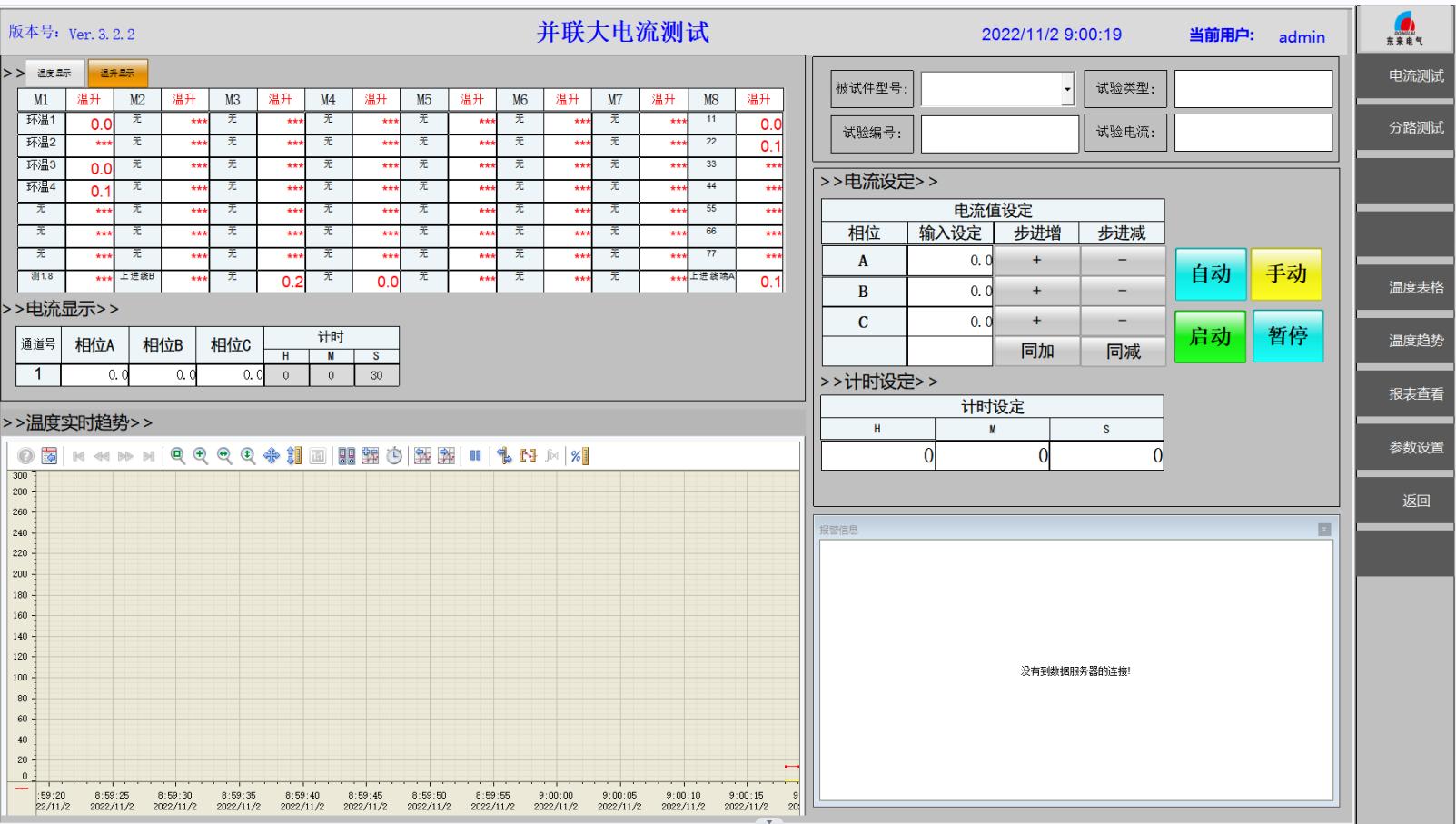
1) Equipped with a high-performance industrial PC featuring a programmable logic controller (PLC) from Siemens as the central processor, it performs real-time scanning of AC signals to enable comprehensive monitoring and closed-loop control. The system incorporates password-based access management, ensuring that only authorized personnel with corresponding operational permissions can execute specific functions.
2) The imported PC features a true color 10.0-inch large LCD touchscreen with intelligent sensors supporting fieldbus technology for fully digital data transmission. The display unit utilizes touch-sensitive color LCD screens with comprehensive Chinese menus, offering clear, intuitive interfaces and user-friendly operation. The system requires no external auxiliary devices during testing, featuring fully automated control and simple, intuitive operation for quick and hassle-free results.
3) This instrument offers two testing methods: fully automatic testing and manual testing, requiring only simple configuration of test current and duration. It is equipped with an automatic current stabilization system.
4) Only the target current needs to be set, eliminating the need for manual monitoring. Simply configure the test parameters, current value, and step size to avoid tedious tasks such as manual voltage adjustment, manual recording, and curve plotting. This reduces labor intensity and improves work efficiency. After operation, data can be directly read and viewed on a computer.
5) Automatic alarm function exceeding specified limits with reliable self-protection against overheating, overcurrent, overvoltage, and short circuits. The AC voltage regulation device protection should employ dual safeguards: microcomputer-based automatic protection control and mechanical micro-motion limit switches to ensure normal operation of constant current power supply, thereby enhancing product safety and reliability.
6) Humanized interface: The software features a user-friendly interface with full Chinese operation. The control software supports data recording, current and temperature waveform storage, data management, reporting, printing, and other practical functions. All parameter settings are completed within the software, enabling intuitive analysis of current-temperature relationships and clear visualization of test data and analysis results. During testing, it automatically tracks target current, stabilizes output current, and adjusts three-phase currents. Upon completion, it automatically resets to zero position.
7) Automatic AC constant current source adjustment: Must comply with temperature rise tests for low-voltage switchgear assemblies (including multi-output control cabinets like GCK and MNS) specified in GB 7251.1~GB 7251.5 standards. The AC constant current source should support parallel operation of multiple constant current power supplies during temperature tests (user-provided documentation proving parallel operation, such as GCK/MNS temperature test reports).
8) Three-phase automatic balancing system: Ensures balanced three-phase output using 0.2S-class current transformers and advanced power electronics technology with strong interference resistance, achieving output accuracy up to Class 0.5.
9) Equipped with a precision adjustment menu, users can manually adjust error values. The programmable AC constant current power supply enables fully intelligent calibration, automatically generating multi-stage correction coefficients within the adjustable range of the device to ensure stable current output precision.
10) Customizable test modules based on user requirements with lifetime free software upgrades
11) Built-in power compensation system
(2)Technical Parameters:
Model | NX-10000QFully Automatic Three-Phase Temperature Rise System | |
*High current output | Three-phase AC,10000A per phase | |
Circuit method | Special Process Electric Voltage Regulator | |
AC input | phase line | 3Φ4W +G |
voltage | 380V±10%,50Hz±2%Three-phase four-wire | |
input currenton | 394A | |
output | phase line | 3Φ4W |
voltage | phase voltage0-15V line voltage25.98V | |
current | The AC0-10000A features continuous adjustable speed control with stepless speed regulation; supports three-phase simultaneous output, single-phase output, or phase-separated output; available in both manual and automatic output modes. | |
rated capacity | 150kVA*3 | |
steady flow accuracy | output(current)≤±0.5% | |
leading-out terminal | binding post | |
protect | The electronic circuit rapidly detects overvoltage, overcurrent, overheating, phase loss, and other conditions to activate automatic trip protection and alarm devices. The voltage and current are zero in non-test states. | |
Precision | source effect | ≤0.3%rating |
time drift | ≤1%rating | |
thermophilic swelling | ≤0.04%rating/℃ | |
load effect | ≤1%Rated value (the rate of change in output voltage caused solely by the output current varying from zero to the rated value) | |
ripple voltage | ≤1%rating+10mV | |
Other | Line Regulati | 0.1% |
Load Regulation | 0.1% | |
Display and Set | Voltage meter display | True color liquid crystal display and digital instrument (Display accuracy: 0.1V, Display error: ≤0.2% ± 1 digit) |
The ammeter shows | Available in 7-inch, 10-inch, and 15-inch sizes for computers | |
Adjust settings | Current (Touch Screen Display Settings) | |
System | Overall machine efficiency | ≥90% |
Dielectric insulation impedance | AC 1800V for 1 minute, 20 megohms | |
cooling equipment | forced fan cooling | |
Noise | <60dB (1mm in front of the machine) | |
Mutual Inductor Accuracy | Class 02S | |
levels of protection | IP20 | |
working condition | working | Long-term temperature rise test |
temperature | -10℃-50℃ | |
Humidity | 0-90%(non-condensed state) | |
Altitude | Below 1500 meters | |
Appearance | structure | Whole-body temperature rise |
| size | Customization |
| busbar | Output calculated at 1-1.2 current per square meter, followed by |
Temperature inspection | Test points: 8 channels, 16 channels, 24 channels, 32 channels, or 200 channels............ available | |
Sensor PT1000 or thermocouple | ||
Equipment Data Acquisition via MES System
1)The device data acquisition information includes: status information, test information, processing information, alarm information, quality information, and energy information.
The equipment should reserve Ethernet ports and other interfaces for MES system usage. Communication interfaces must incorporate electrostatic protection, overvoltage protection, and surge/lightning protection designs.
3)Supports OPC2.0 and OPC3.0 interface standards;
4)The equipment is equipped with an industrial PC, requiring the digital data collected from the device to be stored in a structured data format on either a local device or server database.
5)Equipment manufacturers provide data acquisition information (network configuration, communication protocols, data acquisition parameters, and manuals).
6)Reference for test equipment system architecture (separation of host computer and database server).
To support data collection and interaction requirements for cloud-based and LAN server-based property management platforms, the detection equipment utilizes databases such as MySQL and SQL Server to store test parameters, standards, and device status. Data can be published to the property management platform via the MQTT protocol. Upon receiving the data, the platform pushes the detection results back to the equipment and features a "Cloud Connector" linking function.
1. The detection equipment is equipped with data storage functionality, utilizing conventional databases such as MySQL and SQL Server.
2. The testing workstation actively pushes data, with the pushed format including but not limited to: testing institution ID, testing workstation, sampling plan number, material category, testing items, key parameters, measured values, and test results. Database information is also made available for data retrieval module calls within the testing system.
3. Information such as sampling plan number or time period can be manually entered through the human-machine interface of the host computer.
The content of image-type data transmission includes but is not limited to: sampling plan number, experimental project, feature value 1, feature value 2, etc. (The above content may be adjusted as required).
Image storage method: The system detects that images are stored in binary data stream format in the database. Generated images should be saved in JPG or PNG format, with naming rules and storage location settings customizable as required. The image resolution generated is approximately 833*304.
It can provide database dictionary and database association diagram.
It can provide data retrieval logic for various detection item databases.
It is not merely a database and software, but a robust independently developed solution.